Category: Case Studies

  • Strengthening 911 Call Takers in the Moments that Matter

    Strengthening 911 Call Takers in the Moments that Matter

    How Snohomish County’s Emergency Communications Center Equipped Their Team to Handle Callers Experiencing Mental Health Crises with Confidence

    • Organization: Snohomish County 911 (SNO911)
    • Location: Snohomish County, Washington
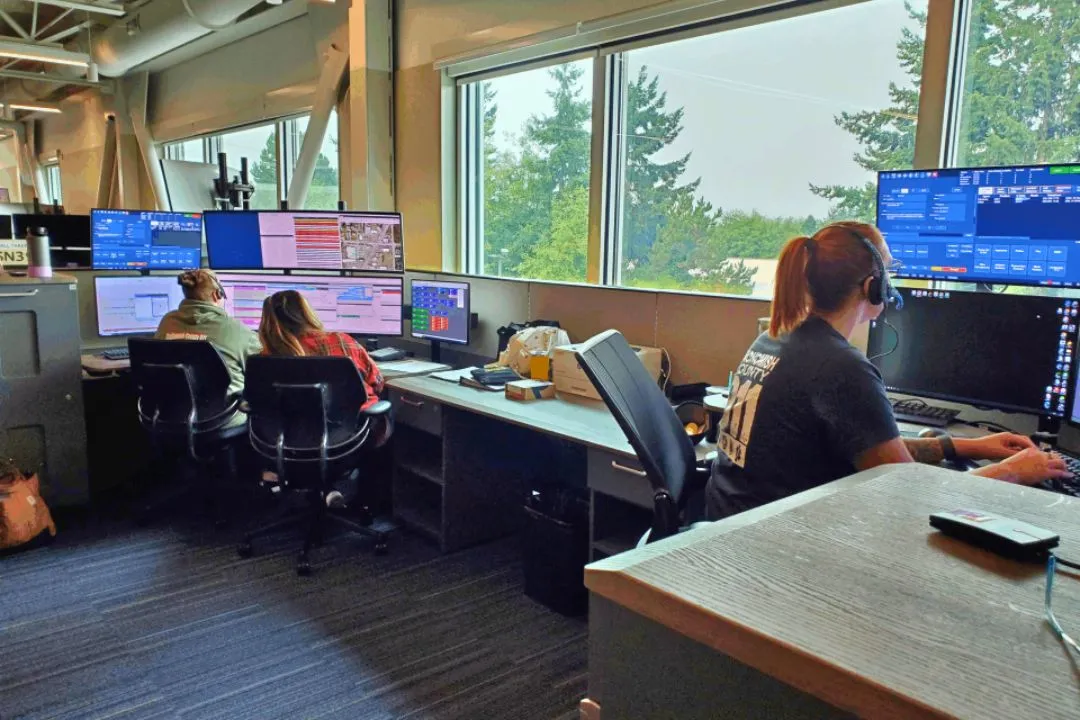
    • Team Size: 111 full-time dispatchers and 16 supervisors (168 total staff)
    • Calls Managed: Average of 1,500 emergency (911) calls per day
    • Training Engagement: Recurring suicide prevention and active listening sessions as part of the SNO911 New Hire Academy (11+ trainings to date)
    • Primary Contact: Alanna Cole, Office of Training and Standards Supervisor)

    The Challenge: Preparing Call Takers for the Unthinkable

    911 call takers are often the first to hear someone in crisis—and the only voice on the line that might keep them safe. But SNO911 recognized an opportunity to boost existing training in the area of callers in crisis. Adding tools and language that help dispatchers better manage their role in mental health-related calls was a welcome endeavor.

    With 911 at the forefront of issues related to mental health and substance abuse in the community, SNO911 brought in Jessi to provide practical, pressure-tested training that matched the weight of the work.

    “I wanted to do a deeper dive into dealing with suicidal and mental health callers. Having [Jessi] come in and speak [gave them] specific tools and strategies to help with the callers so responders can get out there.”

    Alanna Cole, Training Director, SNO911

    The Solution: Role-Specific Training That Performs Under Pressure

    Jessi partnered with SNO911 to design a recurring training experience that gives new hires tactical skills from day one—especially when it comes to managing callers experiencing suicidal ideation, emotionally dysregulated individuals, and critical mental health incidents.

    Each session includes:

    • Strategic debriefs focused on what works, what doesn’t, and why
    • Suicide prevention frameworks customized specifically for emergency dispatchers
    • Communication strategies rooted in crisis psychology and active listening skills
    • Live role-playing scenarios that simulate actual calls—with real-time coaching

    “We don’t want our call takers to be nervous. We want them to be confident when they’re talking to somebody that is in a crisis to help the responders when they get out there. Getting more knowledge to the trainees to have them come in and feel confident with no matter what is on the other end of the line…they’ll be able to have the right training to handle it.”

    Alanna Cole

    The Impact: Clearer Communication. Calmer Responses. Fewer Escalations.

    After implementing this training across nine new hire academies thus far, SNO911 saw a shift—not just in what trainees knew, but in how they handled their calls in real time.

    The most tangible outcome? Call takers are better equipped to process complex mental health-related calls more effectively—with confidence.

    “It’s a really big accomplishment because they get done with the call, they hang up, they take a deep breath, and they’re like, ‘I just did that all by myself. Oh my gosh, I can do anything.’”

    Alanna Cole

    The benefit hasn’t stopped with mental health calls. Trainees are using the same skills to de-escalate everything from domestic disputes to emotionally volatile emergencies—and because the training is hands-on and high-energy, even the quietest participants stay engaged and walk away with tools they remember.

    What This Means for Other Organizations

    When you operate in a high-stakes environment—whether it’s a dispatch center, a crisis line, or a frontline team—your people can’t afford to freeze when someone’s life is on the line.

    SNO911 didn’t wait for a tragedy. They built a training foundation that’s changing how new dispatchers think, speak, and respond under pressure.

    “[Jessi brings] an energy when she comes in and gives her presentations. With [Jessi] coming in and being very interactive and energetic and positive, [she] still makes it informative for the class. It’s very engaging, and they take away a lot.”

    Alanna Cole

    Disclaimer: While this training equips SNO911 call takers with enhanced communication tools and crisis response strategies, it is not intended to replace clinical intervention or professional mental health services. Dispatchers are not licensed behavioral health professionals, and their role remains focused on triaging emergencies and coordinating appropriate responder support. The training is designed to help call takers manage high-stress interactions more effectively within their scope of responsibility—not to diagnose, treat, or resolve underlying mental health conditions.
  • De-Escalation That Protects the People Behind the Wheel

    De-Escalation That Protects the People Behind the Wheel

    How Everett Transit Equipped Its Drivers and Staff with Tactical Listening Skills to Prevent Violence Before It Starts

    • Organization: Everett Transit
    • Location: Everett, Washington
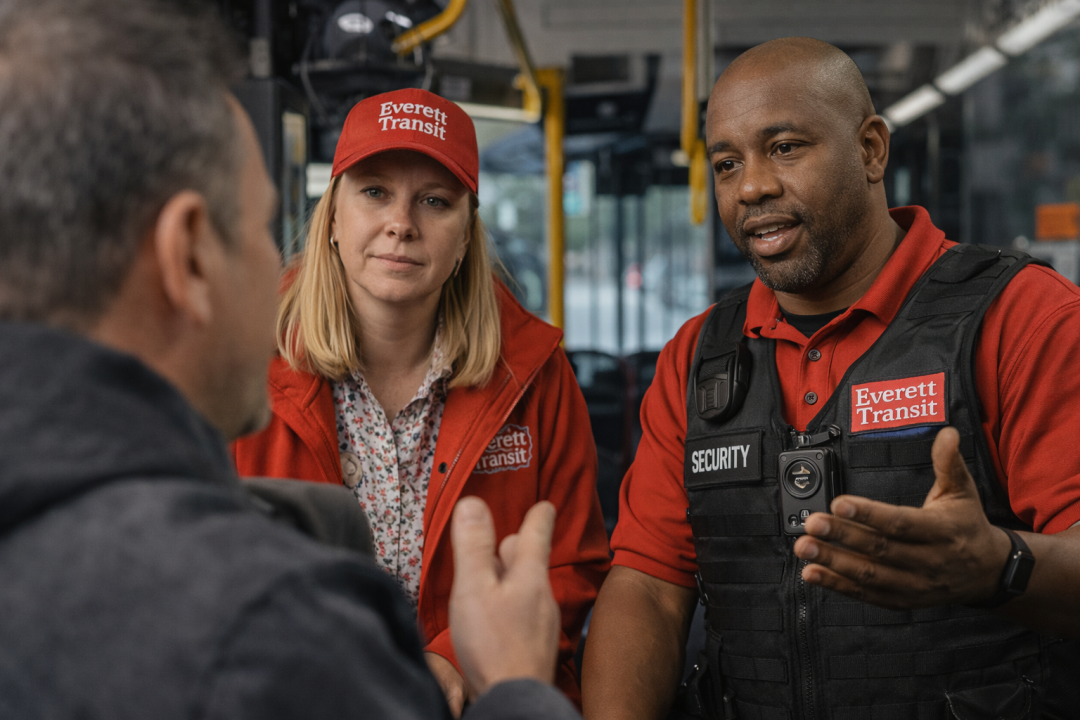
    • Training Audience: ~100 attendees including bus drivers, inspectors, supervisors, security staff, and administrative personnel
    • Training Delivered: Verbal De-Escalation Training focused on tactical active listening skills
    • Primary Contact: Brian Senyitko, Operations Supervisor (Risk Management)

    The Challenge: Verbal Confrontations Escalating Into Violence

    Public transit operators work on the front lines of community safety. Every day, drivers and staff interact with hundreds of passengers; most are routine, but some become emotionally escalated.

    Everett Transit’s leadership noticed a troubling pattern: a growing number of physical attacks on drivers that began as verbal confrontations.

    To address this risk proactively, Operations Supervisor Brian Senyitko sought training that would help staff:

    • Enforce rules without escalating tension
    • Respond effectively to emotionally dysregulated passengers
    • De-escalate conflicts before they turn into violence

    The goal wasn’t just awareness. It was giving staff specific tools they could use in the moment.

    The Solution: Tactical Listening Skills for High-Pressure Situations

    Jessi delivered a focused verbal de-escalation training built from the L.I.F.E. Model of crisis intervention, concentrating on the first and most foundational step: Listen.

    Instead of theory-heavy instruction, the training provided 12 tactical active listening skills that transit employees could use to stabilize emotionally escalated interactions.

    The session emphasized:

    • Practical language for tense conversations
    • Real-world examples of de-escalation in action
    • Small communication adjustments that reduce defensiveness
    • Techniques for building rapport quickly with strangers under stress

    With roughly 100 employees in attendance – from frontline drivers to administrative staff – the session equipped the entire team with a shared communication framework.

    Participants highlighted several elements that made the training resonate, including:

    • “Story about the boy who wanted more from his father”
    • “Real world examples”
    • “Recommendation for using ‘and’ instead of ‘but’”
    • “Delivery of material”
    • “Story about the boy who wanted more from his father”

    The Impact: Immediate Gains in Confidence and De-Escalation Skills

    Post-training survey results showed meaningful improvements across multiple indicators of effective crisis communication.

    • 33% increase in confidence in participants’ ability to de-escalate someone in crisis
    • 22% increase in intent to intervene when faced with someone experiencing a crisis
    • 75% reported meaningful improvement in their verbal de-escalation skills
    • 58.3% reported improvement in their ability to build rapport with someone in crisis
    • 50% reported improvement in empathy and reduced stigma toward people experiencing mental health crises
    • 50% reported increased belief that they can positively impact someone in crisis

    These outcomes reflect a shift not just in knowledge, but in mindset and readiness. Participants also described tangible benefits they took away from the session:

    • “Methods to build rapport with customers.”
    • “Gave me some tools to use in conversations with someone in crisis.”
    • “Improved confidence with de-escalation.”
    • “A better perspective for how to communicate with people in a crisis.”
    • “More tools for de-escalation.”

    Interestingly, the tools resonated even beyond the workplace. This highlights a powerful truth about crisis communication: the skills that prevent workplace conflict are the same ones that strengthen everyday human connection.

    What This Means for Other Organizations

    When employees interact with the public – whether on buses, job sites, hospital floors, or customer service counters – conflict is inevitable.

    The difference between a tense conversation and a dangerous escalation often comes down to communication in the first few moments.

    Everett Transit recognized that protecting their drivers didn’t just mean physical safety measures. It meant giving their team the verbal tools to stabilize situations before they spiral.

    Organizations that equip their people with these skills don’t just reduce risk; they build teams that are more confident, capable, and resilient in high-pressure interactions.

    The final word…

    De-escalation isn’t about saying the perfect thing.

    It’s about listening well enough to lower the temperature of the moment and change the outcome of the interaction.

    For Everett Transit, investing in those skills means their people are better prepared to handle difficult encounters safely, professionally, and with confidence.

  • Meeting Students Where They Are

    Meeting Students Where They Are

    How One Southern Campus Addressed Their Higher-Than-Average Suicide Attempt Rates with Real, Relevant, and Actionable Training

    • Organization: Northwestern State University (NSULA)
    • Location: Natchitoches, Louisiana
    • Student Population: Approximately 3,000 students living on campus + commuter students
    • Training Delivered: 3 trainings, the most recent of which was a suicide prevention training targeted at student-athletes
    • Primary Contacts: Dr. Yonna Pasch, Director of Student Affairs, and Madysen Morgan, Student Government Association (SGA) President

    The Challenge: Strong Campus Culture, but Heavy Topics with Hollow Delivery

    With a student population that includes a large number of commuters, international students, and first-generation college attendees, NSULA has built a culture that feels more like home than a traditional campus.

    But even with that cultural support, students still weren’t getting the tools they needed to manage mental health challenges on their own. NSULA’s internal data revealed something concerning: rates of suicide attempts were higher than those at similar institutions, and students couldn’t always quickly access the support they needed.

    The school had tried to fill the gap with education—but most of it fell flat in a death-by-PowerPoint style.

    What the campus needed wasn’t more content. It was more connection. It was a conversation about suicide prevention that didn’t just focus on the bad, but instead taught students how to build themselves up and be their own best advocates for strong mental health.

    “I did want to get into the counseling center, and from the moment you get on campus, it’s like, ‘Well, it takes forever to get in.’ You can never get in. When I got into my position on SGA…I said, ‘What can we do to get these students here now?’ It was a little difficult to get that support as a student myself.

    [Previous mental health talks] ended up being really sad and heavy, and students aren’t engaged when the energy is sucked out of the room for the whole time and we don’t know when we’re going to be able to see out of that.”

    Madysen Morgan

    The Solution: Real Talk That Stuck with Students

    When NSULA brought Jessi in to speak, they were hoping for something more impactful than the usual wellness lecture. What they got was a training that students immediately recognized as different. Students didn’t just stay engaged—they walked out asking for more.

    By balancing clinical accuracy with real-world delivery, Jessi made the subject approachable—and gave students tools they could immediately apply in their lives and conversations.

    “I remember buzzing after that whole session. I have it written down somewhere—it was literally something that Jessi said [during her presentation], and I was like, ‘Oh, I’m obsessed. This is perfect. Let’s bring her back for every single thing ever because I’m obsessed with her.’

    People behind me were reacting and paying attention the entire time. Everything you said made sense. You were very interactive with us; we don’t like just sitting and listening to someone talk for an hour. It was fun to watch people laugh and see students that you normally don’t see get up and volunteer to do things.”

    Madysen Morgan

    The Impact: Suicide Prevention and Active Listening Infiltrated the Campus

    NSULA doesn’t just host training and then hope for the best; they take action on what they learn. One of the changes the campus has made in recent years is adding suicide hotline stickers to the back of every student ID.

    The impact also showed up in how students started talking to each other, especially in the wake of a tumultuous and polarizing political election. This wasn’t just about checking a box. It was about changing the culture.

    “In my everyday conversations, I was having a lot of people using the tools that Jessi gave them. I noticed kind of a demeanor switch. Jessi came in at a perfect time when demeanor was weird, and then after it was like I could see the light again with people being nice and a little more respectful of everything happening.”

    Madysen Morgan

    What This Means for Other Organizations

    In today’s climate, mental health often ends up on the chopping block when budgets get tight. But NSULA made the intentional decision to keep it on the table—because they understood the cost of doing nothing.

    If your organization serves people navigating identity, pressure, transition, or uncertainty—whether that’s students or employees—they need tools that actually meet them where they are, even if they don’t know they need them yet.

    The final word…

    “I know multiple people that have committed suicide. It sucks, and it’s awful; it’s real, and it’s something that’s happening every day. It’s not something you can just ignore. If you don’t give students the avenue to understand or learn how to help someone that is feeling this way, are you really helping out your students all the ways you can?”

    – Madysen Morgan

  • How a Small Montana Campus Closed the Gap Between Awareness and Action

    How a Small Montana Campus Closed the Gap Between Awareness and Action

    Carroll College Strengthened Its Suicide Prevention Culture—And Empowered a Whole Community

    • Organization: Carroll College
    • Location: Helena, Montana
    • Students Served: Approximately 1,100
    • Training Engagement: In-person suicide prevention training delivered to students, staff, and Helena-area community members
    • Primary Contact: Beth Demmons, Licensed Clinical Social Worker (LCSW) and Community Educator, Carroll College Wellness Center

    The Challenge: Supportive Systems, Still a Missing Piece

    The Carroll College Fighting Saints already had a robust mental health support structure: a culture that encourages all to seek help when needed, suicide prevention training within the Helena Public School System for students starting in middle school, mental health education in the broader Helena community, and a student counseling center that hasn’t had a waitlist in over two years. But this small college was looking for more.

    Raising awareness was no longer enough. They needed training that helped people stay grounded when someone opened up about suicidal ideation—and gave them practice with the actual words to respond with compassion and clarity.

    “I think suicide prevention training helps us have an idea of, ‘Okay, what are the warning signs? What should I be looking for in a loved one?’ But when you see those signs, I think there is a gap between knowledge and action. Yes, you’ve had training, but how do you really implement it when someone’s life is actually on the line?”

    Beth Demmons, LCSW, Carroll College

    The Solution: Real Language. Real Scenarios. Real Impact.

    Carroll brought Jessi in to deliver a suicide prevention training during Suicide Prevention Month that went beyond theory—giving participants both the language to use in the moment and a safe space to practice it.

    “As a certified QPR trainer, I could do a presentation, but it’s kind of like getting advice from Mom and Dad. You hear it from people you know, and it doesn’t carry as much weight, but when you bring in an outsider, [people think], ‘Hey, this must be really important to the campus that they’re bringing an expert in to talk about this.’”

    Beth Demmons

    This training wasn’t just for students or staff. Carroll opened the session to the greater Helena community—and turnout reflected the need. More Helena community members attended than Carroll staff and students.

    The biggest gap that Carroll was trying to fill in their existing mental health awareness programs was practice through role play on how to intervene in a suicidal crisis, plus tactical communication strategies to support the person in crisis.

    With live practice, attuned audience interaction, and language that was immediately usable, participants walked away feeling prepared for the kinds of conversations that can change—or save—a life.

    “The gap Jessi bridged for us, that next level, was the scenario-based training to help people practice what they would do in real life. Once you’ve practiced it, you at least have that muscle memory of, ‘I’ve done this before.’ Every single person that volunteered in the scenarios and the majority of the audience were like, ‘If I ever got into that situation, I know exactly what to say and do.’”

    Beth Demmons

    The Impact: Earlier Interventions. Less Bottlenecking. Broader Access to Care.

    One of the clearest shifts? Improved staff knowledge of how to work with someone who’s having suicidal ideation—not just awareness, but asking the hard questions and intervening at the appropriate level.

    “With this scenario-based training, our housing area coordinators and resident assistants are very effective at intervention. We’re seeing less people in crisis in the wellness center because they’re getting the immediate care they need.”

    Beth Demmons

    What This Means for Other Organizations

    Montana has ranked in the top five states for suicide rates in the nation for the last 30 years. Beth shared why:

    • A culture of self-reliance contributing to stigma associated with mental health, as well as unhealthy coping strategies such as alcohol
    • High-altitude living increases metabolic stress caused by long-term oxygen deprivation
    • Alack of Vitamin D absorption, despite the sunshine, which correlates with higher rates of depression
    • A vast rural community resulting in social isolation and a lack of behavioral health services (which means emergency responders might be hours away)
    • Easy access to firearms

    If you work in an environment where your people are isolated, under pressure, reluctant to talk about mental health—or expected to stay strong no matter what—these risks may already be present in your team.

    Our training gives your team the tools to recognize suicidal ideation, respond to it, and prevent it—before it becomes a crisis.

    “Montana is very much a ‘cowboy up’ mentality, which just means you don’t talk about your emotions; you deal with it, and that’s the way it is.”

    Beth Demmons

    The final word…

    “Education is paramount for anything that we do, and why would it be any different for suicide prevention? Prevention and effective intervention not only save the life of a person in crisis; prevention impacts the lives of all those touched by attempted or completed suicide. We all have a part to play in helping those in need. It’s being a good neighbor, and it’s just what Saints do.”

    – Beth Demmons

  • Training Law Enforcement Officers to Listen, Not Just Problem-Solve

    Training Law Enforcement Officers to Listen, Not Just Problem-Solve

    How a Washington State Crisis Intervention Training Program Strengthened Officer Communication Through Tactical Active Listening

    • Organization: King County Sheriff’s Office (KCSO) Crisis Intervention Training (CIT)
    • Location: King County, Washington
    • Law Enforcement Officers Trained: Approximately 250 annually from multiple agencies across King County
    • Training Delivered: Recurring suicide prevention (11+ to date) and active listening training delivered as a core module within Washington State’s mandated 40-hour CIT program
    • Primary Contact: Megan Ross, CIT Coordinator, Deputy, and Negotiator for KCSO

    The Challenge: Too Much Problem-Solving, Not Enough Active Listening

    In high-stress law enforcement situations, officers are trained to take action—and fast. But that impulse to fix things immediately can sometimes work against them, especially when they’re dealing with someone in emotional distress.

    CIT training covers a wide range of mental health-related information and response tactics, but the CIT coordinators wanted to take it one step further and provide hands-on instruction on how to listen—and how to use listening as a tactical tool.

    “We tend to get into this mindset of just pure problem-solving because we’re going from call to call to call, and that’s our job, right? Solve all the problems, move onto the next one. But I think that’s the most counterproductive thing we’re doing out there when it comes to dealing with people in crisis and truly using active listening skills because we’re rushing through things. We’re just trying to establish our probable cause, or we’re trying to establish what it is that we’re going to do to solve this problem instead of sitting with the people and listening to the people. Sometimes that’s all it takes; there isn’t really a problem-problem. It’s just that people need to have the opportunity to express themselves and chat.”

    — Megan Ross (CIT Coordinator, Deputy, and Negotiator)

    The Solution: Energy, Practice, and Real-World Relevance

    After Megan and Jessi met at a conference in Omaha (despite living in adjacent counties!), Jessi was brought in to teach a recurring 2-hour block focused on active listening, motivational interviewing, and suicide prevention, with active listening as the cornerstone.

    The session was placed at the end of the day in the middle of the week of CIT, yet it consistently keeps officers engaged and participating. Rather than presenting a lecture, Jessi’s training uses interactive practice, in-the-weeds discussion, and tools that apply in a broad variety of situations.

    “The energy that Jessi brings is a game-changer. At the end of the day, they’re still able to be engaged and enthusiastic about learning about wellness and ways to make sure that we’re helping ourselves and other people. It’s so beneficial that they’re still on board, they’re still listening, and they’re taking away good content.”

    Megan Ross

    The Impact: Officer Engagement and System-Wide Implications

    The transformation wasn’t just theoretical—it was immediate and noticeable within the Peer Team. While KCSO doesn’t track outcomes for individual blocks of CIT, what’s clear is this: good active listening has the ability to decrease uses of force and improve officer safety.

    At a time when public trust, internal morale, and mental health outcomes are all under pressure for the law enforcement community, this training gives officers something that makes a difference right away: the ability to communicate with people in crisis, and to do so independently.

    Many law enforcement officers have a tendency to call for a negotiator or mental health professional when high-level active listening is needed, but Megan’s goal with CIT is to empower patrol deputies to deploy those skills themselves.

    “If we’re practicing and putting all these skills into play, then we’re going to have the positive outcomes where we’re able to influence the behaviors of people and not have to use force. At the end of the day, let’s be real—that should be our goal, right?”

    Megan Ross

    “In my agency, sometimes they like to hit that easy button and call the negotiators to come do [active listening] for them. My question to them is always like, ‘Well, have you actually tried to have the conversation and talk with this person?’ I want to empower, educate, and hopefully get officers to be more comfortable with trying to do these things themselves.”

    Megan Ross

    What This Means for Other Organizations

    Active listening isn’t just for crisis negotiators or mental health professionals. It’s for anyone in a high-pressure role who has to interact with people on their worst days.

    If your people are tasked with managing clients, community members, or peers under stress, the same skills that improve law enforcement outcomes can transform your organization, too.

    “I would really just encourage any agency that active listening is a universal skill. It’s not just about citizens and the community—granted, that’s who we’re employed to help—but it’s also about our peers, our friends, and our family members. If we’re practicing good active listening, every relationship in our life is going to benefit from this. So why would we not want to?”

    Megan Ross

    The final word…

    “I have a background in education—I used to teach—and I absolutely loved how engaging Jessi’s presentation was and the energy that she brought. I could tell that she was knowledgeable and she knew her stuff; I wasn’t really so worried about that part as much as I was like, ‘She is so good in front of this audience.’ Let’s be real, cops are challenging, and it can be very, very difficult to teach to this demographic of individuals, especially the ones that have been doing this for a while. I just knew from watching Jessi [in Omaha] she would be able to handle her own in front of our audience. She’s highly engaging and really does such a great job of classroom participation and interaction and bringing the points home. I was like, ‘I need to get her to teach for this program.’”

    – Megan Ross

  • Building Confident Peer Support Teams in High-Stakes Environments

    Building Confident Peer Support Teams in High-Stakes Environments

    How Two Rural Fire Districts Equipped Their Teams for Suicide Prevention with Tactical, Real-World Training

    • Organizations: Snohomish County Fire District #5 & Sky Valley Fire
    • Location: Sultan & Gold Bar, Washington
    • Combined Responders: 112 (career, part-time, and volunteer)
    • Citizens Served: 15,454
    • Annual Calls for Service: ~2,900
    • Training Delivered: Suicide Prevention & Active Listening Training
    • Primary Contact: Steve Tonkin, Peer Team Coordinator, Fire Chaplain, Family Support Officer

    The Challenge: No Tools for the Toughest Conversations

    Both SCFD #5 and Sky Valley Fire serve expansive rural areas with limited mental health infrastructure. While their responders face the same high-stress, high-trauma incidents as urban teams, their peer support members lacked the tactical training to intervene confidently in crisis situations—particularly related to suicide.

    “We didn’t have the tools or formal training that would provide us with legitimate skills and knowledge to assist our peers… [We] would not have been helpful to those that needed help.”

    Steve Tonkin (Peer Team Coordinator, Fire Chaplain, and Family Support Officer)

    The Solution: Tactical Training That Builds Trust

    The departments partnered with Jessi to provide embedded, real-world suicide prevention and active listening training specifically tailored to the fire service. The goal: equip their Peer Team with practical tools, not theory—and do so through an instructor already embedded in their world.

    • Scenario-based suicide prevention training using the L.I.F.E. Model
    • Role-specific active listening strategies
    • High-engagement instruction tailored for firefighters and EMTs
    • Localized context from a trusted mental health professional who also responds to calls

    “We chose Jessi for several reasons. We knew of her outstanding experience and knowledge of the subject… The training that was provided was second-to-none. The training scenarios were ‘real world’ related. Having the engagement of the students throughout the training was amazing and very beneficial to all that were in the room.”

    Steve Tonkin

    The Impact: Confidence, Competence, and Culture Shift

    The transformation wasn’t just theoretical—it was immediate and noticeable within the Peer Team.

    • Team-wide increase in confidence in handling mental health and suicide-related conversations
    • Active listening tools applied in peer interactions, patient care, and team leadership
    • Desire for annual refresher training due to the value and engagement
    • Improved trust and rapport between fire districts and local mental health responders

    “The Peer Team members that received training from her appear to be more confident with their roles as peer support. Many of the team members notified me shortly after the training that they thought the training was amazing. We would like to have this training annually. For a group of firefighters/EMTs to want to go to the same training again states what an exceptional instructor Jessi is.”

    Steve Tonkin

    “I personally have found active listening to be incredibly beneficial. [it] has produced numerous positive circumstances during dialogues with peers, patients, supervisors, subordinates, family, friends, and anyone else. Prior to the lessons jessi gave us, discussing [suicide] was very scary and challenging… I imagine these types of discussions will still be challenging; however, I would not hesitate to have the discussion with anyone. this is a result of the knowledge and confidence that Jessi instilled in us from the training we received from her.”

    Steve Tonkin

    What This Means for Other Organizations

    These departments didn’t wait for tragedy. They opted for real-world, preventive training—and the result was a peer support team that feels equipped to step in before crisis hits.

    “Suicide prevention is not something that should be looked at after a suicide incident happens, it needs to be looked at before a suicide incident happens. This could easily prevent a suicide from happening. The fire service recommends folks to acquire and learn how to use a fire extinguisher before a fire starts in their kitchen or garage, not after a fire. Being preventive and trained will make a difference and will save lives.”

    Steve Tonkin

    The final word…

    “With 23 years in the military and 17+ years as a first responder, I cannot begin to estimate how many instructors I have listened to. I say, listen to, because not all instructors are good at educating others. Jessi’s presentations and demeanor are among the best that I have ever encountered. She educates in such a way that the students want, and do, give her their full attention. Though the classes she gave us consisted of an abundant amount of information, she presented it all to us in a manner that we were not overwhelmed. Her instruction techniques ensured that we all had a clear understanding of the information that she was providing us with.”

    – Steve Tonkin